
English Tenses in Hindi – Definition, Rules, Examples & Chart
English Grammar सीखते समय सबसे ज्यादा confusion Tenses को लेकर होता है। कभी समझ नहीं आता कि sentence में is, was, will या has been कब लगाना है। इसी confusion को दूर करने के लिए यह English Tenses in Hindi free course तैयार किया गया है।
इस एक ही पेज पर आप Present, Past और Future तीनों Tenses को आसान Hindi भाषा में सीखेंगे। हर tense को simple rules, real-life examples, और practice के साथ समझाया गया है, ताकि आप बिना रटे English sentence सही बना सकें।
यह course खास तौर पर beginners और Hindi-medium students के लिए बनाया गया है, जहाँ step-by-step तरीके से English Grammar को बिल्कुल आसान बनाया गया है।
अब चलिए सीधे अपने मुख्य विषय की ओर बढ़ते हैं और Tenses को आसान तरीके से समझते हैं।
Tense क्या है?
जब हम कोई sentence बोलते या लिखते हैं, तो उससे यह पता चलता है कि काम कब हुआ, कब हो रहा है, या कब होगा। English grammar में इसी time को Tense कहा जाता है।
सीधे शब्दों में कहें तो – Tense हमें बताता है कि कोई काम किस समय हुआ है।
Tense Definition In English
Tense is a form of a verb that tells us the time of an action or event. It helps us understand whether something happened in the past, is happening now in the present, or will happen later in the future.
Tense को बहुत आसान उदाहरण से समझें
नीचे एक ही काम को तीन अलग-अलग समय में देखिए।
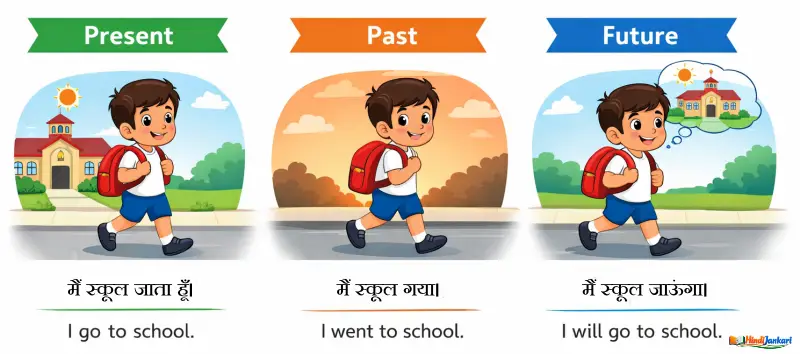
काम वही है – School जाना। लेकिन समय बदल गया, इसलिए sentence बदल गया। इसी बदलाव को Tense कहते हैं।
अब जब Tense की basic समझ हो गई है, तो आइए जान लेते हैं कि Tense कितने प्रकार के होते हैं और उन्हें अलग-अलग क्यों किया गया है।
Tenses के प्रकार (Types of Tenses)
अब जब आप समझ चुके हैं कि Tense क्या होता है, तो अगला सवाल यह आता है कि Tense कितने प्रकार के होते हैं। क्योंकि हर sentence का समय एक-सा नहीं होता—कभी काम अभी हो रहा होता है, कभी पहले हो चुका होता है और कभी आगे होने वाला होता है।
इसी वजह से English Grammar में Tense को अलग-अलग parts में बाँटा गया है। इस section में हम Types of Tenses को आसान Hindi भाषा में समझेंगे, ताकि आगे चलकर Present, Past और Future Tense को सीखते समय कोई confusion न रहे।
Tense के 3 मुख्य प्रकार
English grammar में Tense के 3 main types होते हैं:
- Present Tense
- Past Tense
- Future Tense
अब हम तीनों को एक-एक करके बहुत आसान भाषा में समझेंगे।
1. Present Tense क्या होता है?
English grammar में Present Tense सबसे पहला और सबसे ज़रूरी tense होता है।जब हम किसी ऐसे काम की बात करते हैं जो अभी हो रहा है, रोज होता है, या हमेशा सही रहता है, तब हम Present Tense का उपयोग करते हैं।
सरल शब्दों में: जो काम अभी के समय से जुड़ा होता है, वह Present Tense कहलाता है।
अगर sentence पढ़ते समय लगे कि काम अभी चल रहा है या रोज होता है, तो समझ जाइए कि वह Present Tense है।
Hindi & English Examples of Present Tense
नीचे दिए गए sentences ध्यान से पढ़िए:
मैं खाना खाता हूँ।
मैं अभी खाना खा रहा हूँ।
English में:
I eat food.
I am eating food.
यहाँ काम अभी के समय से जुड़ा है, इसलिए ये सभी sentences Present Tense में हैं।
Present Tense कब इस्तेमाल किया जाता है?
Present Tense का use हम इन स्थितियों में करते हैं:
1. जब काम अभी हो रहा हो
Examples:
मैं पढ़ रहा हूँ।
वह क्रिकेट खेल रहा है।
English Examples:
I am studying.
He is playing cricket.
2. जब काम रोज होता हो
Examples:
मैं रोज स्कूल जाता हूँ।
वह रोज दाँत साफ करता है।
English:
I go to school every day.
He brushes his teeth daily.
3. जब कोई बात हमेशा सही हो
Examples:
सूरज पूर्व से निकलता है।
पानी आग बुझाता है।
English:
The sun rises in the east.
Water puts out fire.
Present Tense पहचानने की आसान पहचान
Hindi sentences में Present Tense को पहचानना बहुत आसान है।
अगर sentence के अंत में ये शब्द आएँ:
- है
- हूँ
- हैं
- रहा है / रही है / रहे हैं
तो sentence ज़्यादातर Present Tense में होता है।
Examples:
वह पढ़ता है।
मैं खेल रहा हूँ।
Present Tense के 4 प्रकार होते हैं
Present Tense को चार भागों में बाँटा गया है ताकि हम हर तरह के काम को सही तरीके से बता सकें।
Present Tense के 4 Types:
- Present Indefinite या Simple Present Tense
- Present Continuous Tense
- Present Perfect Tense
- Present Perfect Continuous Tense
Present Indefinite Tense in Hindi
English grammar में Simple Present Tense को ही Present Indefinite Tense भी कहा जाता है। बहुत से बच्चे confused हो जाते हैं कि ये दो अलग-अलग tense हैं, लेकिन ऐसा नहीं है।
Simple Present Tense = Present Indefinite Tense
इस tense का use हम तब करते हैं जब कोई काम रोज होता है, आदत में है, या हमेशा सच रहता है।
Simple Present Tense Meaning in Hindi
Simple Present Tense का मतलब हिंदी में
जो काम सामान्य रूप से, रोज-रोज, या हमेशा होता है।
इसीलिए इसे Present Indefinite Tense भी कहते हैं, क्योंकि इसमें किसी खास समय (अभी, अभी-अभी) का ज़िक्र नहीं होता।
Present Indefinite Tense को आसान शब्दों में समझें
नीचे दिए गए वाक्य ध्यान से पढ़िए:
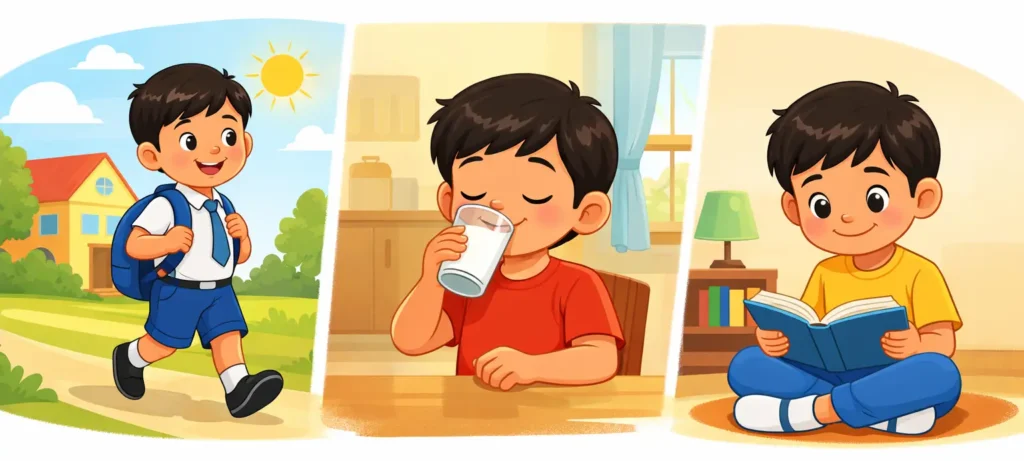
मैं स्कूल जाता हूँ।
मैं दूध पीता हूँ।
वह रोज किताब पढ़ता है।
इन sentences में काम रोज होता है, इसलिए ये सभी Present Indefinite ya Simple Present tense के उदाहरण हैं।
English में यही sentences होंगे:
I go to school.
I drink milk.
He reads a book daily.
Simple Present Tense का Use कब होता है?
Simple Present Tense का use मुख्य रूप से 4 जगह किया जाता है।
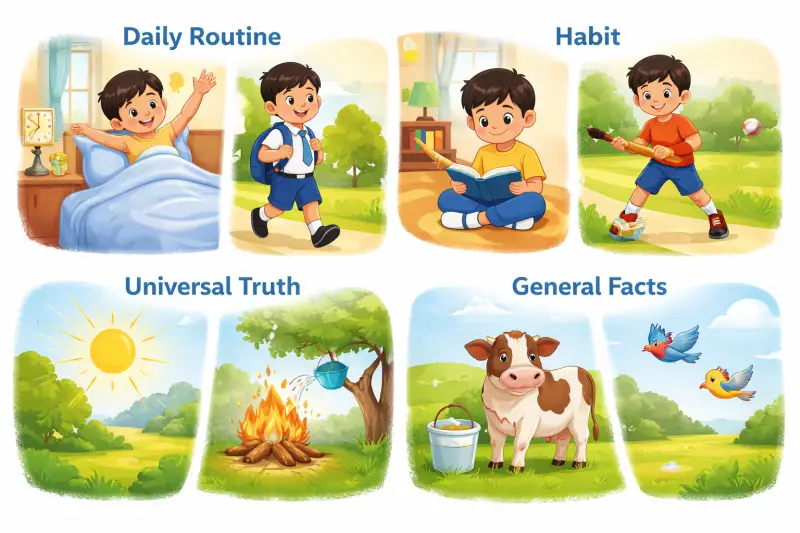
1. रोज होने वाले काम (Daily Routine)
Examples:
मैं रोज सुबह उठता हूँ।
वह हर दिन स्कूल जाता है।
English:
I wake up every morning.
He goes to school every day.
ये सभी simple present tense ka sentences हैं।
2. आदत (Habit)
Examples:
मैं रोज किताब पढ़ता हूँ।
वह क्रिकेट खेलता है।
English:
I read books daily.
He plays cricket.
ये simple present tense examples हैं जो आदत बताते हैं।
3. हमेशा सही रहने वाली बातें (Universal Truth)
Examples:
सूरज पूर्व से निकलता है।
पानी आग बुझाता है।
English:
The sun rises in the east.
Water puts out fire.
ऐसे sentences हमेशा simple present tense में ही होते हैं।
4. सामान्य तथ्य (General Facts)
Examples:
गाय दूध देती है।
पक्षी उड़ते हैं।
English:
A cow gives milk.
Birds fly.
Simple Present Tense Rules
अब हम simple present tense rules बहुत आसान भाषा में समझेंगे।
Rule 1: Verb का Base Form
अगर subject हो: I, We, You, They
तो verb का base form आता है।
Examples:
I play.
We go to school.
Note: Base form verb का सबसे basic और original रूप होता है, जिस पर कोई tense या ending नहीं होती। जैसे:- go, eat, play, write, run. आप इसे Parts of Speech में बहुत अच्छे से समझ सकते है।
Rule 2: He / She / It के साथ Verb में s या es
अगर subject He, She, It या किसी एक व्यक्ति का नाम हो, तो verb में s / es लगता है।
Examples:
He plays football.
She sings a song.
s या es कब लगाएँ?
- play → plays
- read → reads
लेकिन अगर verb के अंत में आए: s, sh, ch, x, o तो es लगता है।
Examples:
go → goes
watch → watches
teach → teaches
ये rules समझना simple present tense के लिए बहुत ज़रूरी है।
Present Indefinite Tense Affirmative Sentences
Affirmative sentences मतलब साधारण वाक्य।
Examples (Hindi):
मैं सेब खाता हूँ।
वह दूध पीता है।
English:
I eat an apple.
He drinks milk.
ये present indefinite tense affirmative sentences Hindi and English examples हैं।
Simple Present Tense Negative Sentences
अब सीखते हैं simple present tense negative sentences.
Negative sentence बनाने के लिए use होता है: do not / does not
Structure:
Subject + do not / does not + verb (base form)
Examples:
I do not play cricket.
He does not play cricket.
Hindi:
मैं क्रिकेट नहीं खेलता हूँ।
वह क्रिकेट नहीं खेलता है।
Note: does के साथ verb में s नहीं लगता।
इसे ही present indefinite negative tense भी कहते हैं।
Simple Present Interrogative Sentences (Questions)
Question sentence बनाने के लिए use होता है: Do / Does
Structure:
Do / Does + Subject + Verb?
Examples:
Do you go to school?
Does he read books?
Hindi:
क्या तुम स्कूल जाते हो?
क्या वह किताब पढ़ता है?
ये simple present tense Interrogative sentences examples हैं।
Short Answers (Yes / No)
Examples:
Do you read books?
Yes, I do. / No, I do not.
Does she sing?
Yes, she does. / No, she does not.
Simple Present Tense Examples in Hindi & English (Mixed)
मैं रोज स्कूल जाता हूँ।
वह दूध पीता है।
हम क्रिकेट खेलते हैं।
वह गाना गाती है।
English:
I go to school daily.
He drinks milk.
We play cricket.
She sings a song.
ये सभी present simple tense examples हैं।
Simple Present Interrogative-Negative (Intro-Negative) Sentences
ऐसे questions जिनमें question + negative दोनों होते हैं।
Structure:
Do / Does + Subject + not + Verb (base form)?
Examples:
Do you not go to school?
Does he not read books?
Does she not sing songs?
Hindi:
क्या तुम स्कूल नहीं जाते हो?
क्या वह किताब नहीं पढ़ता है?
क्या वह गाना नहीं गाती है?
ये Simple Present Tense – Interrogative-Negative sentences हैं।
Short Answers (Interrogative-Negative के लिए)
Examples:
Do you not play cricket?
Yes, I do. / No, I do not.
Does he not drink milk?
Yes, he does. / No, he does not.
Simple Present Tense – Mixed Examples (Hindi & English)
मैं रोज़ अख़बार नहीं पढ़ता हूँ।
वह दूध नहीं पीता है।
क्या हम रोज़ क्रिकेट खेलते हैं?
क्या वह गाना नहीं गाती है?
English:
I do not read newspaper daily.
He does not drink milk.
Do we play cricket daily?
Does she not sing a song?
ये सभी Simple Present Tense के affirmative, negative, interrogative और interrogative-negative examples हैं।
Simple Present Tense Exercise in Hindi
अब थोड़ा practice करते हैं।
Exercise 1: Hindi से English बनाएँ
- मैं रोज सुबह उठता हूँ।
- वह किताब पढ़ता है।
- हम स्कूल जाते हैं।
Answers:
- I wake up every morning.
- He reads a book.
- We go to school.
Exercise 2: Negative बनाइए
- He plays cricket.
- I drink tea.
Answers:
- He does not play cricket.
- I do not drink tea.
Exercise 3: Affirmative से Interrogative-Negative बनाइए
- He goes to school.
- She reads books.
- They play cricket.
Answers:
- Does he not go to school?
- Does she not read books?
- Do they not play cricket?
Present Continuous Tense In Hindi
English grammar में Present Continuous Tense का इस्तेमाल तब किया जाता है जब कोई काम इस समय चल रहा हो। यानि जो काम अभी हो रहा है, अभी जारी है, या बोलते समय चल रहा है, उसे Present Continuous Tense कहते हैं।
सरल शब्दों में कहें तो: जो काम अभी हो रहा है, वह Present Continuous Tense होता है।
Present Continuous Tense Meaning in Hindi
Present Continuous Tense का हिंदी में अर्थ है – “वर्तमान समय में जारी काम”
इस tense में अक्सर हिंदी वाक्य के अंत में ये शब्द आते हैं: रहा है, रही है, रहे हैं
इसी पहचान से हम समझ जाते हैं कि sentence present continuous tense में है।
Present Continuous Tense को आसान उदाहरण से समझें
नीचे दिए गए वाक्य ध्यान से पढ़िए:
मैं खाना खा रहा हूँ।
वह होमवर्क कर रही है।
वे गाना गा रहे हैं।
इन सभी sentences में काम अभी चल रहा है, इसलिए ये सभी present continuous tense examples हैं।
English में यही sentences होंगे:
I am eating food.
She is doing homework.
They are singing a song.
Present Continuous Tense कब इस्तेमाल किया जाता है?
Present Continuous Tense का use मुख्य रूप से इन situations में किया जाता है।

1. जब काम अभी चल रहा हो
Examples (Hindi):
मैं पढ़ रहा हूँ।
वह फुटबॉल खेल रहा है।
English:
I am studying.
He is playing football.
यह सबसे common present continuous tense examples हैं।
2. जब काम बोलते समय हो रहा हो
Examples:
मैं तुमसे बात कर रहा हूँ।
वह टीवी देख रहा है।
English:
I am talking to you.
He is watching TV.
3. जब कोई अस्थायी काम चल रहा हो
Examples:
मैं इन दिनों इंग्लिश सीख रहा हूँ।
वह आजकल जिम जा रहा है।
English:
I am learning English these days.
He is going to the gym nowadays.
Present Continuous Tense की पहचान कैसे करें?
अगर हिंदी sentence में ये शब्द दिखें, तो समझ जाइए कि sentence Present Continuous Tense में है:
- रहा है
- रही है
- रहे हैं
Examples:
वह पढ़ रहा है।
मैं लिख रहा हूँ।
Present Continuous Tense Structure (Sentence बनाने का तरीका)
अब हम सीखते हैं कि present continuous tense in Hindi to English sentence कैसे बनता है।
Structure:
Subject + is / am / are + verb + ing
is / am / are का सही use
- I के साथ → am
- He / She / It के साथ → is
- We / You / They के साथ → are
Examples:
I am reading.
He is playing.
They are running.
Verb में “ing” कैसे लगाएँ?
- read → reading
- play → playing
- eat → eating
अगर verb के अंत में e हो, तो e हटाकर ing लगता है:
- write → writing
- make → making
Present Continuous Tense Affirmative Sentences
Affirmative sentences मतलब साधारण वाक्य।
Examples (Hindi):
मैं पानी पी रहा हूँ।
वह चित्र बना रही है।
English:
I am drinking water.
She is drawing a picture.
Present Continuous Tense Negative Sentences
अब सीखते हैं present continuous tense negative sentences.
Negative sentence बनाने के लिए
is not / am not / are not का use होता है।
Structure:
Subject + is / am / are + not + verb + ing
Examples:
I am not playing.
He is not reading a book.
Hindi:
मैं नहीं खेल रहा हूँ।
वह किताब नहीं पढ़ रहा है।
Present Continuous Tense Interrogative Sentences
Question sentence बनाने के लिए is / am / are को आगे ले आते हैं।
Structure:
Is / Am / Are + Subject + verb + ing
Examples:
Are you reading?
Is he playing cricket?
Hindi:
क्या तुम पढ़ रहे हो?
क्या वह क्रिकेट खेल रहा है?
ये present continuous tense interrogative sentences हैं।
Short Answers (Yes / No)
Examples:
Are you studying?
Yes, I am. / No, I am not.
Is she singing?
Yes, she is. / No, she is not.
Present Continuous Tense Examples in Hindi & English
मैं लिख रहा हूँ।
वह टीवी देख रही है।
हम स्कूल जा रहे हैं।
वे क्रिकेट खेल रहे हैं।
English:
I am writing.
She is watching TV.
We are going to school.
They are playing cricket.
Present Continuous Tense Exercises
अब practice करते हैं ताकि concept अच्छे से समझ में आ जाए।
Exercise 1: Hindi से English बनाएँ
- मैं पढ़ रहा हूँ।
- वह खाना खा रही है।
- वे खेल रहे हैं।
Answers:
- I am reading.
- She is eating food.
- They are playing.
Exercise 2: Negative बनाइए
- He is playing.
- I am watching TV.
Answers:
- He is not playing.
- I am not watching TV.
Exercise 3: Question बनाइए
- You are reading.
- She is dancing.
Answers:
- Are you reading?
- Is she dancing?
Present Perfect Tense In Hindi
English grammar में Present Perfect Tense का इस्तेमाल तब किया जाता है जब कोई काम अभी-अभी पूरा हुआ हो, लेकिन उसका असर या परिणाम अब भी मौजूद हो।
यह tense हमें यह बताता है कि काम खत्म हो चुका है, लेकिन उसका संबंध अभी के समय से है।
सरल शब्दों में कहें तो:
जो काम पूरा हो गया है और उसका असर अभी दिखाई देता है, वह Present Perfect Tense होता है।
Present Perfect Tense Meaning in Hindi
Present Perfect Tense का हिंदी में अर्थ है – “वर्तमान से जुड़ा हुआ पूरा किया गया काम”
हिंदी वाक्यों में इस tense की पहचान अक्सर इन शब्दों से होती है: चुका है, चुकी है, चुके हैं, लिया है, दिया है, गया है
इसी कारण इसे पहचानना बच्चों के लिए आसान हो जाता है।
Present Perfect Tense को आसान उदाहरण से समझें
नीचे दिए गए वाक्य ध्यान से पढ़िए:
मैं खाना खा चुका हूँ।
वह अपना होमवर्क कर चुकी है।
वे स्कूल पहुँच चुके हैं।
इन सभी वाक्यों में काम पूरा हो चुका है, लेकिन बात अभी के समय की हो रही है। इसलिए ये सभी present perfect tense sentences ke examples हैं।
English में यही sentences होंगे:
I have eaten food.
She has done her homework.
They have reached school.
Present Perfect Tense कब इस्तेमाल किया जाता है?
Present Perfect Tense का use कुछ खास situations में किया जाता है।

1. जब काम अभी-अभी पूरा हुआ हो
Examples (Hindi):
मैंने अभी खाना खाया है।
वह अभी स्कूल से आया है।
English:
I have just eaten food.
He has just come from school.
यह सबसे common present perfect tense examples हैं।
2. जब काम पूरा हो गया हो, लेकिन समय न बताया गया हो
Examples:
मैंने यह किताब पढ़ी है।
उसने यह फिल्म देखी है।
English:
I have read this book.
He has watched this movie.
यहाँ काम पूरा है, लेकिन कब हुआ यह नहीं बताया गया है।
3. जब काम का असर अभी दिख रहा हो
Examples:
फर्श गीली है, किसी ने पानी गिराया है।
वह थका हुआ है, वह दौड़ चुका है।
English:
The floor is wet. Someone has spilled water.
He is tired. He has run.
Present Perfect Tense की पहचान कैसे करें?
अगर हिंदी sentence में ये शब्द आएँ, तो sentence ज़्यादातर
Present Perfect Tense in Hindi में होता है:
- चुका है / चुकी है / चुके हैं
- लिया है / दिया है
- गया है / आई है
Examples:
मैं स्कूल जा चुका हूँ।
उसने दूध पी लिया है।
Present Perfect Tense Structure
अब हम सीखेंगे कि present perfect tense in Hindi to English कैसे बनाया जाता है।
Structure:
Subject + has / have + verb (third form)
has और have का सही use
- I, We, You, They → have
- He, She, It, किसी एक व्यक्ति का नाम → has
Examples:
I have finished my work.
She has completed her homework.
Verb की Third Form क्या होती है?
Verb की तीसरी form को Past Participle कहते हैं।
कुछ examples:
- eat → eaten
- go → gone
- do → done
- read → read
- write → written
यह forms याद रखना Present Perfect Tense के लिए बहुत ज़रूरी है।
Present Perfect Tense Affirmative Sentences
Affirmative sentences मतलब साधारण वाक्य।
Examples (Hindi):
मैंने अपना काम पूरा कर लिया है।
वह घर पहुँच गया है।
English:
I have completed my work.
He has reached home.
ये sentences of present perfect tense हैं।
Present Perfect Tense Negative Sentences
अब सीखते हैं negative sentences।
Structure:
Subject + has / have + not + verb (third form)
Examples:
I have not eaten any food.
She has not finished her work.
Hindi:
मैंने खाना नहीं खाया है।
उसने अपना काम पूरा नहीं किया है।
Present Perfect Tense Interrogative Sentences
Question बनाने के लिए has / have को sentence के शुरू में लाते हैं।
Structure:
Has / Have + Subject + verb (third form)?
Examples:
Have you done your homework?
Has he gone to school?
Hindi:
क्या तुमने अपना होमवर्क कर लिया है?
क्या वह स्कूल जा चुका है?
Short Answers (Yes / No)
Examples:
Have you eaten food?
Yes, I have. / No, I have not.
Has she finished her work?
Yes, she has. / No, she has not.
Present Perfect Tense Examples in Hindi & English
मैंने पत्र लिख दिया है।
वह फिल्म देख चुका है।
हम मैच जीत चुके हैं।
उसने दूध पी लिया है।
English:
I have written a letter.
He has watched the movie.
We have won the match.
She has drunk milk.
Present Perfect Tense Exercises
अब थोड़ा practice करते हैं ताकि concept clear हो जाए।
Exercise 1: Hindi से English बनाएँ
- मैंने खाना खा लिया है।
- वह स्कूल जा चुका है।
- उन्होंने काम पूरा कर लिया है।
Answers:
- I have eaten food.
- He has gone to school.
- They have completed the work.
Exercise 2: Negative बनाइए
- She has done her homework.
- I have watched the movie.
Answers:
- She has not done her homework.
- I have not watched the movie.
Exercise 3: Question बनाइए
- You have finished your work.
- He has read the book.
Answers:
- Have you finished your work?
- Has he read the book?
ये सभी present perfect tense के examples हैं।
Present Perfect Continuous Tense In Hindi
English grammar में Present Perfect Continuous Tense का उपयोग तब किया जाता है जब कोई काम कुछ समय से शुरू हुआ हो, अभी भी चल रहा हो, और हम यह भी बताना चाहें कि वह काम कितनी देर से हो रहा है।
यह tense हमें काम की continuity (लगातार चलना) और time duration (समय)—दोनों की जानकारी देता है।
सरल शब्दों में कहें तो, जो काम पहले शुरू हुआ, अब तक चल रहा है और अभी भी जारी है, वही Present Perfect Continuous Tense होता है।
Present Perfect Continuous Tense Definition in Hindi
ऐसा tense जो किसी काम के शुरू होने से लेकर अभी तक चलने को बताता है, और यह भी दिखाता है कि वह काम कितनी देर से हो रहा है।
हिंदी वाक्यों में इसकी पहचान अक्सर इन शब्दों से होती है: से रहा है, से रही है, से रहे हैं
Present Perfect Continuous Tense Meaning
Present Perfect Continuous Tense का हिंदी में अर्थ है – “वर्तमान समय तक जारी रहने वाला कार्य”
इस tense में दो बातें बहुत ज़रूरी होती हैं:
- काम अभी भी चल रहा होता है
- काम के साथ समय (since / for) जुड़ा होता है
Present Perfect Continuous Tense को आसान उदाहरण से समझें
नीचे दिए गए वाक्य ध्यान से पढ़िए:
मैं दो घंटे से पढ़ रहा हूँ।
वह सुबह से क्रिकेट खेल रहा है।
वे कई दिनों से अंग्रेज़ी सीख रहे हैं।
इन सभी sentences में काम पहले शुरू हुआ, अब तक चल रहा है, इसलिए ये present perfect continuous tense sentences in Hindi हैं।
English में यही sentences होंगे:
I have been studying for two hours.
He has been playing cricket since morning.
They have been learning English for many days.
Present Perfect Continuous Tense कब इस्तेमाल किया जाता है?
इस tense का उपयोग कुछ खास situations में किया जाता है।
1. जब काम कुछ समय से चल रहा हो और अभी भी जारी हो
Examples (Hindi):
मैं एक घंटे से लिख रहा हूँ।
वह सुबह से गाना गा रहा है।
English:
I have been writing for one hour.
He has been singing since morning.
2. जब काम की duration बतानी हो
Examples:
वह पाँच साल से इस स्कूल में पढ़ रहा है।
मैं दो महीनों से कंप्यूटर सीख रहा हूँ।
English:
He has been studying in this school for five years.
I have been learning computers for two months.
3. जब काम का असर अभी दिखाई दे
Examples:
वह थका हुआ है क्योंकि वह दौड़ रहा है।
उसके हाथ गंदे हैं क्योंकि वह काम कर रहा है।
English:
He is tired because he has been running.
His hands are dirty because he has been working.
Present Perfect Continuous Tense की पहचान कैसे करें?
अगर हिंदी sentence में ये बातें दिखें, तो sentence ज़्यादातर present perfect continuous में होता है:
- “से” शब्द का इस्तेमाल
- रहा है / रही है / रहे हैं
- काम अभी भी जारी हो
Examples:
मैं सुबह से पढ़ रहा हूँ।
वह दो घंटे से टीवी देख रहा है।
Present Perfect Continuous Tense Rules in Hindi
अब हम present perfect continuous tense rules in Hindi को आसान भाषा में समझते हैं।
Rule 1: has been / have been का प्रयोग
Sentence बनाने के लिए has been या have been का उपयोग होता है।
- He / She / It / एक व्यक्ति → has been
- I / We / You / They → have been
Rule 2: Verb की “ing” form
इस tense में verb की ing form आती है।
Examples:
read → reading
play → playing
write → writing
Rule 3: since और for का सही उपयोग
Since → किसी point of time के लिए
- since morning
- since Monday
For → time duration के लिए
- for two hours
- for five days
Present Perfect Continuous Tense Structure
Structure:
Subject + has been / have been + verb (ing) + since / for + time
Present Perfect Continuous Tense in Hindi to English (Examples)
Hindi:
मैं दो घंटे से पढ़ रहा हूँ।
English:
I have been studying for two hours.
Hindi:
वह सुबह से काम कर रहा है।
English:
He has been working since morning.
Affirmative Sentences (साधारण वाक्य)
Examples (Hindi):
मैं तीन दिनों से अभ्यास कर रहा हूँ।
वह कई सालों से यहाँ रह रहा है।
English:
I have been practicing for three days.
He has been living here for many years.
Present Perfect Continuous Tense Negative Sentences
Negative sentence बनाने के लिए not लगाया जाता है।
Structure:
Subject + has been / have been + not + verb (ing)
Examples:
I have not been studying for two hours.
He has not been working since morning.
Hindi:
मैं दो घंटे से पढ़ नहीं रहा हूँ।
वह सुबह से काम नहीं कर रहा है।
Present Perfect Continuous Tense Interrogative Sentences
Question बनाने के लिए has / have को आगे ले आते हैं।
Structure:
Has / Have + Subject + been + verb (ing)?
Examples:
Have you been studying for two hours?
Has he been working since morning?
Hindi:
क्या तुम दो घंटे से पढ़ रहे हो?
क्या वह सुबह से काम कर रहा है?
Short Answers (Yes / No)
Examples:
Have you been reading?
Yes, I have. / No, I have not.
Has she been cooking?
Yes, she has. / No, she has not.
Present Perfect Continuous Tense Examples in Hindi & English
मैं सुबह से पढ़ रहा हूँ।
वह दो घंटे से खेल रहा है।
हम कई दिनों से तैयारी कर रहे हैं।
वे लंबे समय से इंतज़ार कर रहे हैं।
English:
I have been studying since morning.
He has been playing for two hours.
We have been preparing for many days.
They have been waiting for a long time.
Present Perfect Continuous Tense Exercises
अब थोड़ा अभ्यास करते हैं ताकि concept पूरी तरह clear हो जाए।
Exercise 1: Hindi से English बनाएँ
- मैं दो घंटे से लिख रहा हूँ।
- वह सुबह से पढ़ रहा है।
- वे कई दिनों से काम कर रहे हैं।
Answers:
- I have been writing for two hours.
- He has been studying since morning.
- They have been working for many days.
Exercise 2: Negative बनाइए
- She has been cooking for one hour.
- I have been watching TV since the evening.
Answers:
- She has not been cooking for one hour.
- I have not been watching TV since the evening.
Exercise 3: Question बनाइए
- You have been learning English for months.
- He has been running since morning.
Answers:
- Have you been learning English for months?
- Has he been running since morning?
ये सभी present perfect continuous tense exercises के practical examples हैं।
आगे का Tenses हम जल्दी ही add करेंगे।